Inside Fox's 36 180 FIT RC2 Cartridge - Eurobike 2010
Fox was showing off a very cool cutaway of the new FIT RC2 cartridge that is used in select 36 160 mm and 180 mm forks. We took the opportunity to catch up with Fox's Mario Galasso and put together a great video explaining what is going on inside your Fox fork as it follows the terrain.
Put on your learning hat and check out the video and photos inside. Because knowledge is power!
Read on...Watch the video to see what's going on inside Fox's FIT RC2 cartridge
![photo]()
![photo]()
Learn more about Fox's slippery Kashima coating
![photo]()
Visit the Fox website to see their entire lineup.
Stay tuned for more Eurobike coverage!
Put on your learning hat and check out the video and photos inside. Because knowledge is power!
Read on...

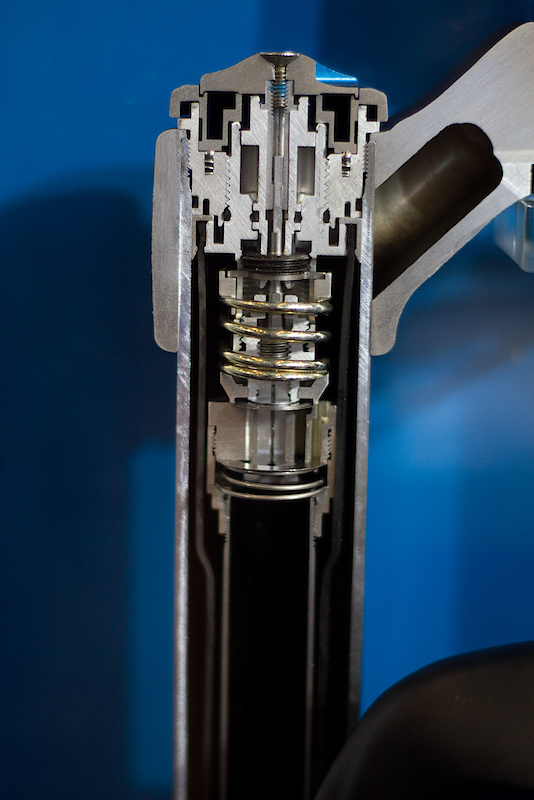
Fox had this very cool cutaway on display showing the insides of the FIT RC2 cartridge that is used in some of their 36 180 mm and 160 mm forks. For 2011 the new cartridge is inverted from the previous year, with the compression assembly and bladder now residing at the top of the leg and the rebound being found at the bottom. While this photo makes the internals look quite complicated - which of course they are - once you get a handle on the technology it will become much more clear. If you look closely at the photo above you should be able to spot the rubber bladder which sits just inside of the stanchion tube walls. The bladder serves to compensate for the oil displaced by the damping rod entering the cartridge. Because there is close to zero air within the oil filled cartridge, there needs to be space for the extra volume to go to as the rod enters the cart, which the rubber bladder accomplishes by expanding. The large gold colored spring at the center of the fork is the high speed compression spring. Turning the H/S dial atop the fork leg preloads this spring which holds down the shims that control the high speed oil flow. The more preload on the shims, the higher the oil force needed to flex them and the more high speed compression damping you'll have. Moving further down into the fork you may notice a second smaller diameter spring that is holding a single large diameter shim in place. This acts as the compression check valve, letting oil flow freely during the rebound stroke, but forcing the same oil through the compression assembly when the fork is being compressed. Not shown in this photo is the fork's hydraulic bottom out which is found on the coil sprung models, but absent on the air versions due to the air spring's inherent rising rate as the fork is compressed and volume decreases.
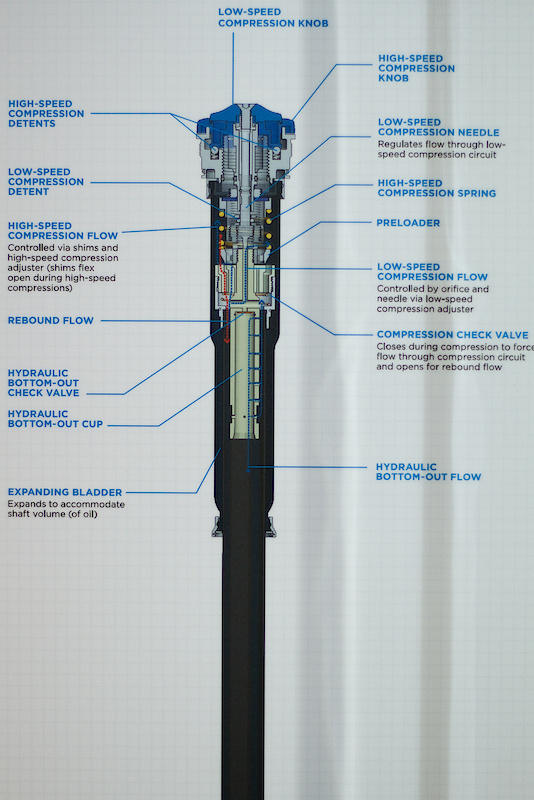
Compare this labeled photo to the cutaway shot above in order to better understand each part that makes up the FIT RC2 cartridge. While it's easier to just jump on your bike and shred, some basic knowledge of just what is happening inside your suspension as you ride is good to know and can aid in proper setup. Get your geek on and watch the video, study the words and photos, and impress your friends.
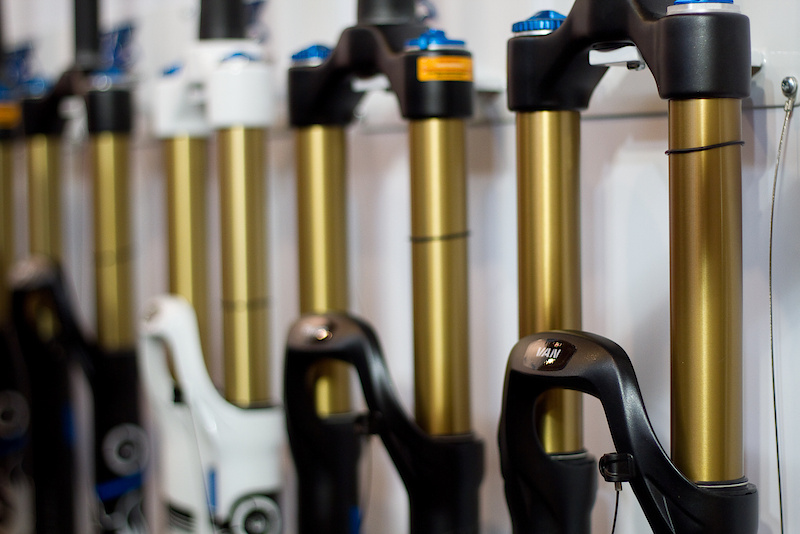
Kashima goodness as found on Fox's 36 lineup of forks. By adding Kashima coating to the stanchion tubes of select models, Fox aims to both increase suspension activity by limiting friction between the upper tubes and the seals and bushings, as well as increasing the working life of the stanchions themselves. Oh ya, it looks great as well.
Visit the Fox website to see their entire lineup.
Author Info:

 Member since Oct 18, 2005
Must Read This Week
[UPDATED] Final Elite XC Results & Overall Standings from the Mairiporã XC World Cup 2024
42295 views
42295 views
Sign Up for the Pinkbike Newsletter - All the Biggest, Most Interesting Stories in your Inbox
PB Newsletter Signup
To each his own, but a big part of the sport for me is understanding the technology that lets us shred so hard. Maybe I'm just a nerd?
Joe Graney from Santa Cruz spent like 3 installments on explaining VPP and bicycle suspension in general (virtual pivot migration, spring rates, leverage ratios, bearings etc.) and I still don't get most of it... and I consider myself as a bike tech geek.
I have my own message to everybody! People! Buy 36 160 Talas RC2 in large quantities! These are the best forks on the market! then please: get bored fast! so I can get one from ebay... I do it just for the sake of the environment, second hand FTW!
Baring a few differences the new Fox cartridge is not a million miles away from the 2006 Boxxer cartridge (it does seem better machined though).
As for fit and forget with the rebound, that is because Fox rebound on the older fork is so limited in usable range. I wish the range was better and more usable with them.
Don't get me wrong, I love my 2009 36 Fox Float RC2's.
For me Fox are where it is at for a 160mm (can't comment on 180mm), SC fork, they beat a Lyric hands down, but go bigger and 2010 Boxxers are so much nicer than 40's.
Simply supply and demand.
The only thing that I am buying here is well separated LSC from HSC in the new Fit cartridge. So te fork stays more active while still having good anti brake dive LSC action. My Lyrik truly sucks with that. Smoothness or brake dive, that's what I can get with Mission Control. Other than this Fox, F-it!
But yes, there is certain number of people that buy stuff for looks and some do it for parking lot tests. Though the last ones should follow Marzocchi for these are the ultimate parking lot supsension performance test winners. These are as plush as a wee Willy meeting a firebreeding whore with a bucket of vaseline
Haven't tried it so be welcome to cast the first stone. Obviously not many will ever try the fork with new FIT cartridge with and without Kashima to tell how much does it differ... I'm personaly sad for I could pay a lot for this FIT cartridge and feather weight 2,1kg 36 Talas 160, but this coating: just breaks my balls. I want to shift from RS Lyrik for it does exactly what you wrote about 09 Talas: stability or plushness - can't have both in Lyrik.
Also I can not see these to be more attractive only becouse it blings almost like gold, it's all the matter of an individual taste, so please stop sying 'it looks great'.
its the cheaper aftermarket R models, and all of the OE (original equipment) forks that don't have the Kashima coating
which kinda sucks, if you buy a top of the line complete bike you ain't getting Kashima coating!
Also, which ones don't get the Kashima?
way to f**k the environment fox or just global business??